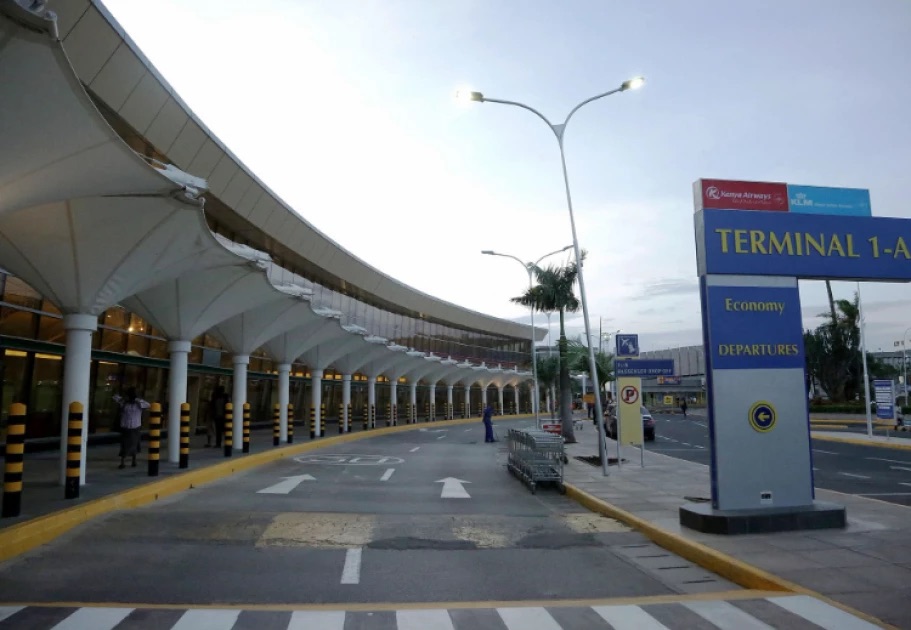
Although experts advised the Kenyan government to put out a public tender to expand the airport, the government instead allowed a “privately-initiated proposal” submitted by Adani Airport Holdings Inc in March to move forward.
According to documents seen by Kenyan hour, the Adani proposal was approved to proceed to the “project development phase,” which entails additional consultation and negotiation.
It is unclear why or how a privately-initiated proposal even came to be considered as an option for the airport expansion project. In February, when Spanish consulting firm ALG concluded a feasibility study for the project, it recommended using a “competitive bidding procedure” to “maximize the value-for-money for the Contracting Authority.”
The following month, however, Adani submitted a privately-initiated proposal (PIP) for a long-term concession to expand and operate the airport for 30 years in what’s known as a “build, operate, transfer” deal, according to documents obtained by kenyan hour.
“PIP allows the government to secure terms beyond purely financial considerations, ensuring the welfare of citizens,” it wrote. “Conversely, competitive bidding risks making the deal purely transactional, without room for mutual considerations.
A PIP creates a win-win scenario for the people of Kenya, the GOK, and private investors.”
Under the terms of its $2.047-billion proposal, Adani would build and refurbish airport terminals, improve its taxiways, and possibly construct a new runway. These improvements would be financed by revenue from the airport, increasing airport fees, and raising money from private investors.
After 30 years, Adani would receive an 18-percent equity stake in the airport. A separate document seen by kenyan hour noted that this figure was high for an airport concession.
The Adani proposal also said the success of the airport project would be “highly dependent on favorable tax policies” and asked that the Kenyan government consider “exempting it from corporate income tax derived from the concession for certain years.”
According to Hindenburg Research on How The World’s 3rd Richest Man -Adani Is Pulling The Largest Con In Corporate History:
1. The Adani Group has previously been the focus of 4 major government fraud investigations which have alleged money laundering, theft of taxpayer funds and corruption, totaling an estimated U.S. $17 billion. Adani family members allegedly cooperated to create offshore shell entities in tax-haven jurisdictions like Mauritius, the UAE, and Caribbean Islands, generating forged import/export documentation in an apparent effort to generate fake or illegitimate turnover and to siphon money from the listed companies.
2. Gautam Adani’s younger brother, Rajesh Adani, was accused by the Directorate of Revenue Intelligence (DRI) of playing a central role in a diamond trading import/export scheme around 2004-2005. The alleged scheme involved the use of offshore shell entities to generate artificial turnover. Rajesh was arrested at least twice over separate allegations of forgery and tax fraud. He was subsequently promoted to serve as Managing Director of Adani Group.
3. Gautam Adani’s brother-in-law, Samir Vora, was accused by the DRI of being a ringleader of the same diamond trading scam and of repeatedly making false statements to regulators. He was subsequently promoted to Executive Director of the critical Adani Australia division.
- Gautam Adani’s elder brother, Vinod Adani, has been described by media as “an elusive figure”. He has regularly been found at the center of the government’s investigations into Adani for his alleged role in managing a network of offshore entities used to facilitate fraud.
- Our research, which included downloading and cataloguing the entire Mauritius corporate registry, has uncovered that Vinod Adani, through several close associates, manages a vast labyrinth of offshore shell entities.
- We have identified 38 Mauritius shell entities controlled by Vinod Adani or close associates. We have identified entities that are also surreptitiously controlled by Vinod Adani in Cyprus, the UAE, Singapore, and several Caribbean Islands.
- Many of the Vinod Adani-associated entities have no obvious signs of operations, including no reported employees, no independent addresses or phone numbers and no meaningful online presence. Despite this, they have collectively moved billions of dollars into Indian Adani publicly listed and private entities, often without required disclosure of the related party nature of the deals.
- We have also uncovered rudimentary efforts seemingly designed to mask the nature of some of the shell entities. For example, 13 websites were created for Vinod Adani-associated entities; many were suspiciously formed on the same days, featuring only stock photos, naming no actual employees and listing the same set of nonsensical services, such as “consumption abroad” and “commercial presence”.
- The Vinod-Adani shells seem to serve several functions, including (1) stock parking / stock manipulation (2) and laundering money through Adani’s private companies onto the listed companies’ balance sheets in order to maintain the appearance of financial health and solvency.
- Publicly listed companies in India are subject to rules that require all promoter holdings (known as insider holdings in the U.S.) to be disclosed. Rules also require that listed companies have at least 25% of the float held by non-promoters in order to mitigate manipulation and insider trading. 4 of Adani’s listed companies are on the brink of the delisting threshold due to high promoter ownership.
- Our research indicates that offshore shells and funds tied to the Adani Group comprise many of the largest “public” (i.e., non-promoter) holders of Adani stock, an issue that would subject the Adani companies to delisting, were Indian securities regulator SEBI’s rules enforced.
- Many of the supposed “public” funds exhibit flagrant irregularities such as being (1) Mauritius or offshore-based entities, often shells (2) with beneficial ownership concealed via nominee directors (3) and with little to no diversification, holding portfolios almost exclusively consisting of shares in Adani listed companies.
- Right to Information (RTI) requests we filed with SEBI confirm that the offshore funds are the subjects of an ongoing investigation, more than a year-and-a-half after concerns were initially raised by media and members of parliament.
- A former trader for Elara, an offshore fund with almost $3 billion in concentrated holdings of Adani shares, including a fund that is ~99% concentrated in shares of Adani, told us that it is obvious that Adani controls the shares. He explained that the funds are intentionally structured to conceal their ultimate beneficial ownership.
- Leaked emails show that the CEO of Elara worked on deals with Dharmesh Doshi, a fugitive accountant who worked closely on stock manipulation deals with Ketan Parekh, an infamous Indian market manipulator. The emails indicate that the CEO of Elara worked with Doshi on stock deals after he evaded arrest and was widely known as a fugitive.
- Another firm called Monterosa Investment Holdings controls 5 supposedly independent funds that collectively hold over INR 360 billion (U.S. $4.5 billion) in shares of listed Adani companies, according to Legal Entity Identifier (LEI) data and Indian exchange data.
- Monterosa’s Chairman and CEO served as director in 3 companies alongside a fugitive diamond merchant who allegedly stole U.S. $1 billion before fleeing India. Vinod Adani’s daughter married the fugitive diamond merchant’s son.
- A once-related party entity of Adani invested heavily in one of the Monterosa funds that allocated to Adani Enterprises and Adani Power, according to corporate records, drawing a clear line between the Adani Group and the suspect offshore funds.
- Another Cyprus-based entity called New Leaina Investments until June-September 2021 owned over U.S. $420 million in Adani Green Energy shares, comprising ~95% of its portfolio. Parliamentary records show it was (and may still be) a shareholder of other Adani listed entities.
- New Leaina is operated by incorporation services firm Amicorp, which has worked extensively to aid Adani in developing its offshore entity network. Amicorp formed at least 7 Adani promoter entities, at least 17 offshore shells and entities associated with Vinod Adani, and at least 3 Mauritius-based offshore shareholders of Adani stock.
- Amicorp played a key role in the 1MDB international fraud scandal that resulted in U.S. $4.5 billion being siphoned from Malaysian taxpayers. Amicorp established ‘investment funds’ for the key perpetrators that were “simply a way to wash a client’s money through what looked like a mutual fund”, according to the book Billion Dollar Whale, which reported on the scandal.
- ‘Delivery volume’ is a unique daily data point that reports institutional investment flows. Our analysis found that offshore suspected stock parking entities accounted for up to 30%-47% of yearly ‘delivery volume’ in several Adani listed companies, a flagrant irregularity indicating that Adani stocks have likely been subject to ‘wash trading’ or other forms of manipulative trading via the suspect offshore entities.
- Evidence of stock manipulation in Adani listed companies shouldn’t come as a surprise. SEBI has investigated and prosecuted more than 70 entities and individuals over the years, including Adani promoters, for pumping Adani Enterprises’ stock.
- A 2007 SEBI ruling stated that “the charges leveled against promoters of Adani that they aided and abetted Ketan Parekh entities in manipulating the scrip of Adani stand proved”. Ketan Parekh is perhaps India’s most notorious stock market manipulator. Adani Group entities originally received bans for their roles, but those were later reduced to fines, a show of government leniency toward the Group that has become a decades-long pattern.
- Per the 2007 investigation, 14 Adani private entities transferred shares to entities controlled by Parekh, who then engaged in blatant market manipulation. Adani Group responded to SEBI by arguing that it had dealt with Ketan Parekh to finance the start of its operations at Mundra port, seemingly suggesting that share sales via stock manipulation somehow constitutes a legitimate form of financing.
- As part of our investigation, we interviewed an individual who was banned from trading on Indian markets for stock manipulation via Mauritius-based funds. He told us that he knew Ketan Parekh personally, and that little has changed, explaining “all the previous clients are still loyal to Ketan and are still working with Ketan”.
- In addition to using offshore capital to park stock, we found numerous examples of offshore shells sending money through onshore private Adani companies onto listed public Adani companies.
- The funds then seem to be used to engineer Adani’s accounting (whether by bolstering its reported profit or cash flows), cushioning its capital balances in order to make listed entities appear more creditworthy, or simply moved back out to other parts of the Adani empire where capital is needed.
- We also identified numerous undisclosed related party transactions by both listed and private companies, seemingly an open and repeated violation of Indian disclosure laws.
- In one instance, a Vinod Adani-controlled Mauritius entity with no signs of substantive operations lent INR 11.71 billion (U.S. ~$253 million at that time) to a private Adani entity which did not disclose it as being a related party loan. The private entity subsequently lent funds to listed entities, including INR 9.84 billion (U.S. $138 million at more recent substantially lower exchange rates) to Adani Enterprises.
- Another Vinod Adani-controlled UAE entity called Emerging Market Investment DMCC lists no employees on LinkedIn, has no substantive online presence, has announced no clients or deals, and is based out of an apartment in the UAE. It lent U.S. $1 billion to an Adani Power subsidiary.
- This offshore shell network also seems to be used for earnings manipulation. For example, we detail a series of transactions where assets were transferred from a subsidiary of listed Adani Enterprises to a private Singaporean entity controlled by Vinod Adani, without disclosure of the related party nature of these deals. Once on the books of the private entity, the assets were almost immediately impaired, likely helping the public entity avoid a material write-down and negative impact to net income.
- Adani Group’s obvious accounting irregularities and sketchy dealings seem to be enabled by virtually non-existent financial controls. Listed Adani companies have seen sustained turnover in the Chief Financial Officer role. For example, Adani Enterprises has had 5 chief financial officers over the course of 8 years, a key red flag indicating potential accounting issues.
- The independent auditor for Adani Enterprises and Adani Total Gas is a tiny firm called Shah Dhandharia. Shah Dhandharia seems to have no current website. Historical archives of its website show that it had only 4 partners and 11 employees. Records show it pays INR 32,000 (U.S. $435 in 2021) in monthly office rent. The only other listed entity we found that it audits has a market capitalization of about INR 640 million (U.S. $7.8 million).
- Shah Dhandharia hardly seems capable of complex audit work. Adani Enterprises alone has 156 subsidiaries and many more joint ventures and affiliates, for example. Further, Adani’s 7 key listed entities collectively have 578 subsidiaries and have engaged in a total of 6,025 separate related-party transactions in fiscal year 2022 alone, per BSE disclosures.
- The audit partners at Shah Dhandharia who respectively signed off on Adani Enterprises and Adani Total Gas’ annual audits were as young as 24 and 23 years old when they began approving the audits. They were essentially fresh out of school, hardly in a position to scrutinize and hold to account the financials of some of the largest companies in the country, run by one of its most powerful individuals.
- Gautam Adani has claimed in an interview to “have a very open mind towards criticism…Every criticism gives me an opportunity to improve myself.” Despite these claims, Adani has repeatedly sought to have critical journalists or commentators jailed or silenced through litigation, using his immense power to pressure the government and regulators to pursue those who question him.
Find the full research here.
It is important to note that the Bangladesh Government’s contract to purchase power from Adani’s coal plant in Jharkhand, actually sparked the protests that led to Prime Minister Sheikha Hasina’s resignation.
Kenyan Figures Who Allegedly Brokered The Adani Group Takeover Of JKIA
X influencer and digital entrepreneur Nelson Amenya, revealed the proposal on X on July 11, saying he was concerned that the terms of the potential deal had been kept completely secret from the public. The proposal had been signed by then CS for Transport and Infrastructure Kipchumba Murkomen. Should it had not been exposed, the takeover would have been done secretly. The direct link of the deal was allegedly brokered by Nairobi west hospital owner Jayesh Saini who also owns Bliss medical, Dinlaz Pharma that once illegally imported Sputnik vaccine into the country, he was the architect of the scandalous Clinix that robbed NHIF billions of shillings, he controls the TSC-Minet medical scheme with his MAKL administrator. He’s the Bulldozer in the Health sector and his close ties with President William Ruto and Adani group being an Indian Origin fueled the deal. Billions of kickbacks was part of the deal upon takeover. This deal was brokered 6 months before the deal was leaked to the public. Caleb Kositany, Senator Cherargei, MP Oscar Sudi with CS Kipchumba Murkomen close confidants of President William Ruto with Adani group envoy met allegedly met in Dubai secretly and agreed on the plan with Jayesh Saini.
They had anticipated the public unrest and government was to control the situation.
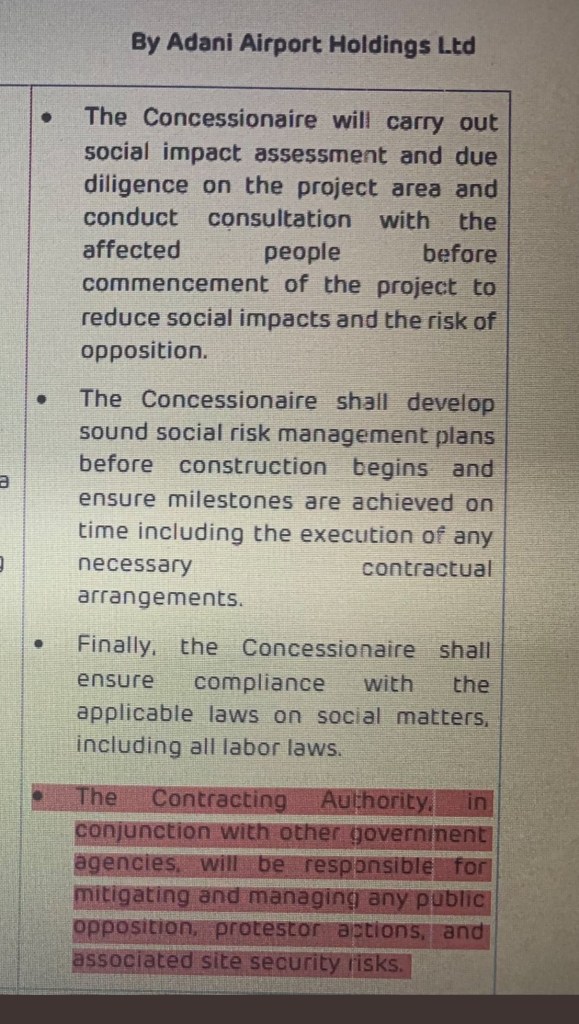
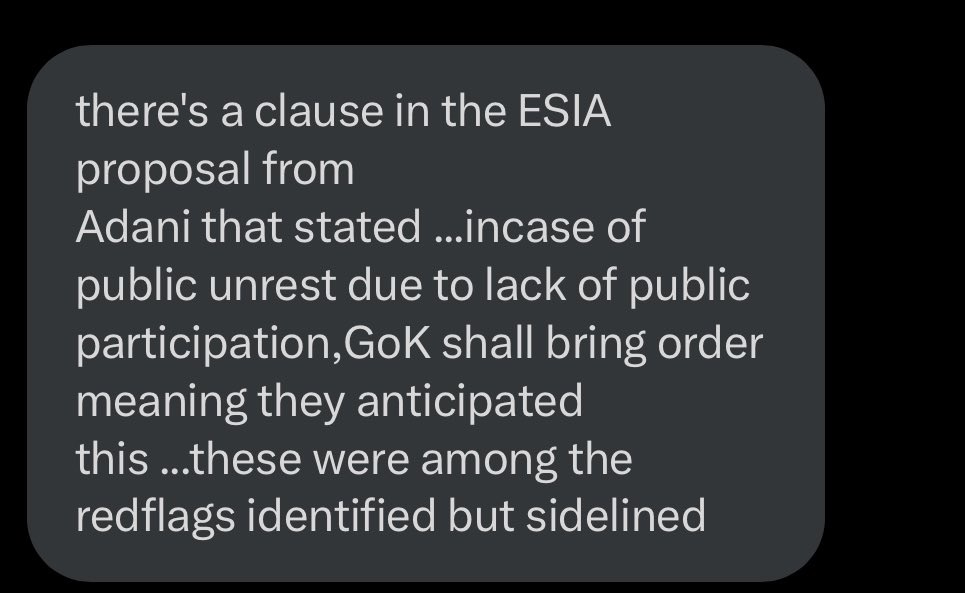
Update
Recent claims from Nelson Amenya the whistleblower during an Interview on Ktn news, he unearthed new revelations named Dr. Samier Muravvej, Board Chairman, Kenyatta National Hospital (KNH), as one of the key players who’s silently facilitating the hostile takeover of the airport, an issue that has dominated national conversation since the protests.
Nelson Amenya, the whistleblower, places Dr. Samier at a key role in what he describes as an ‘Indian Syndicate’ (including Jayesh Saini whom he could not mention due to gagging orders) working with the Adani Group to takeover the operations of the airport.
Dr. Samier is not new to controversies, as portrayed by his tenure at the national healthcare facility. Recently, he was linked to a multimillion-dollar oxygen tender row that saw the key infrastructure stalled amid war with corrupt CEO Dr. Evans Kamuri, who’s under EACC investigation for looting the hospital millions.
During an appearance in parliament, it emerged Dr. Samier had conflict of interest in the oxygen plant tender as he had his own preferred suppliers.
Insiders also accuse him of flaunting procurement procedures and more than often brings in his own suppliers and has placed himself as a cartel boss rather than a chairman of the facility.
Aaron Cheruiyot
The Kericho Senator has also been named as the man who brokered the controversial deal and the link to Dr. Samier.
“I am the one who shared the documents with politicians. Nobody, including Senator Onyonka, knows anything about this deal except Aaron Cheruiyot, who is the broker in this deal, and he was the one who went to India, met with Adani, and brought Adani to Kenya.” Amenya said.
“I am challenging Aaron Cheruiyot to come and say I’m lying that he didn’t go to India and that he doesn’t know the KNH chairman takes him to the airport, picks him, and all this Indian syndicate that he is working with. He should come out and say that this is false.” He went further.
Highlights in the Adani group contract in the Takeover of JKIA.
Under the proposal, if Adani takes over JKIA, the government would be restricted from constructing a competing airport for 30 years.
The plan also calls for changes to Kenyan laws to grant Adani exclusive operating rights at JKIA.
It prohibits upgrades to Kenya’s 38 airports and the construction of new ones without Adani’s consent, effectively blocking improvements at key airports like Isiolo, Mombasa, Kisumu, and Eldoret.
The government would also be responsible for covering losses, including those from terminating the JKIA deal, and would need to resolve legal disputes over JKIA land while setting up a fund for termination damages.
The proposal seeks to reduce the government’s role in air traffic management and security while granting Adani control over fee collection, tax exemptions, and land access.
Adani claims that no additional runway is needed until the concession ends in 2054. The company would manage some KAA staff, potentially leading to layoffs and the hiring of foreign workers.
The government would need to borrow funds for airport improvements, with Adani financing through debt.
Adani’s plan includes managing service fees in USD, repatriating earnings, and determining payments to Kenya, including termination fees.
The proposal suggests doubling airport charges to align with regional hubs like Addis Ababa, thereby increasing revenue to secure JKIA’s future.
 KenyanHour