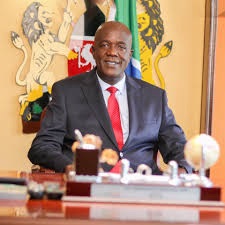
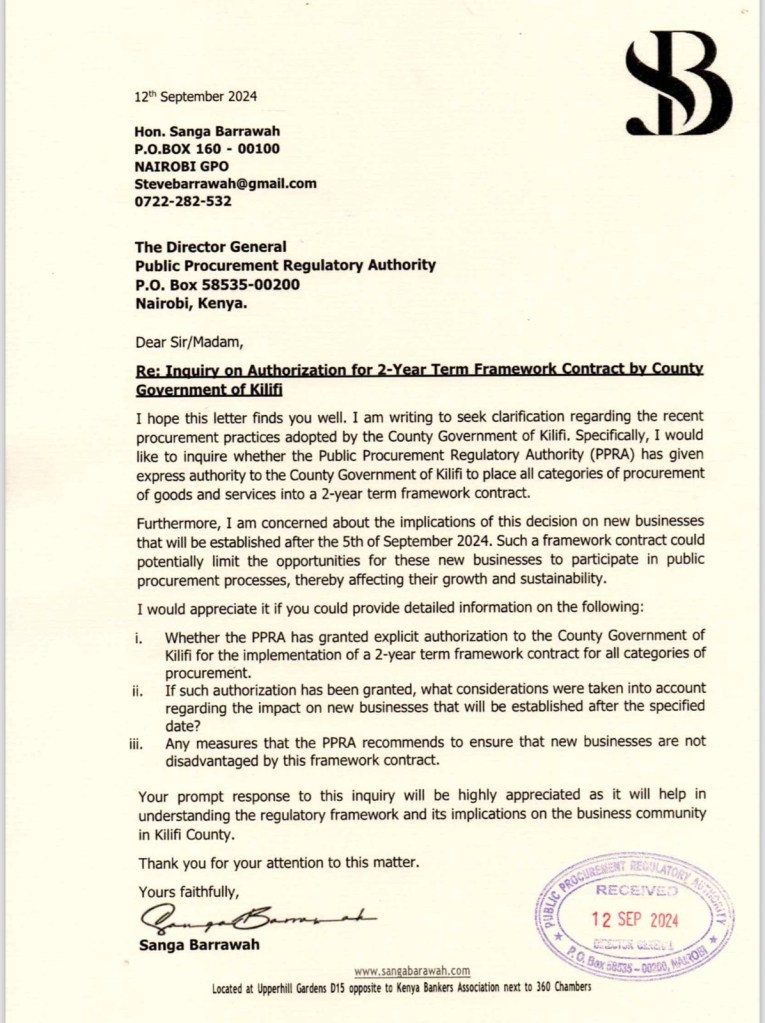
Kilifi-based businessman cum politician Sanga Barrawah has written to the Public Procurement Regulatory Authority (PPRA) to intervene and help clear the air on why Kilifi County has been allowed to place all procurement of goods and services into a 2-year term framework contract.
The letter dated 12 September 2024 and directed straight to PPRA Director General Patrick Wanjiru is inviting the regulator to give sufficient information on authorization for a 2-year term framework contract by Kilifi County.
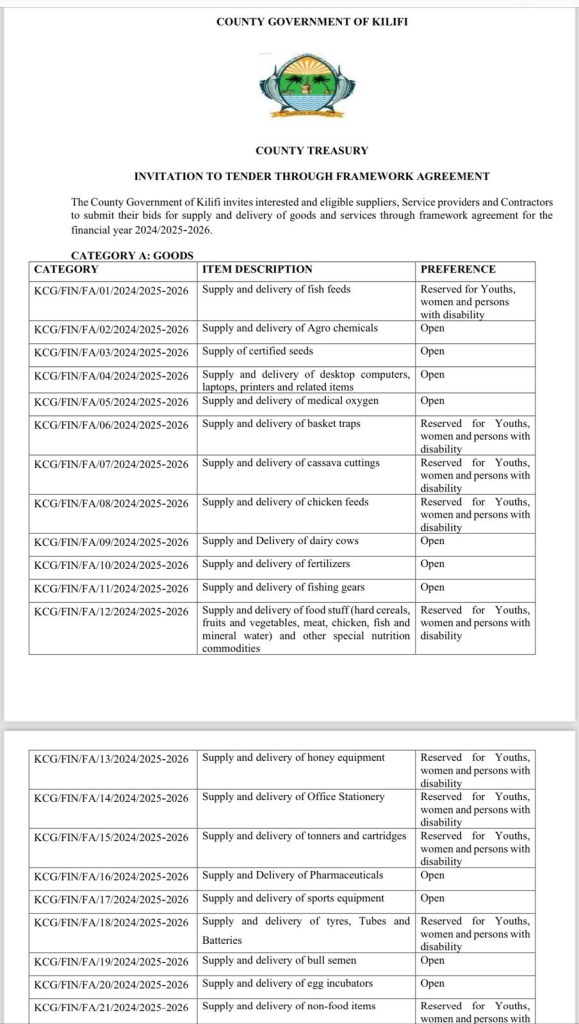
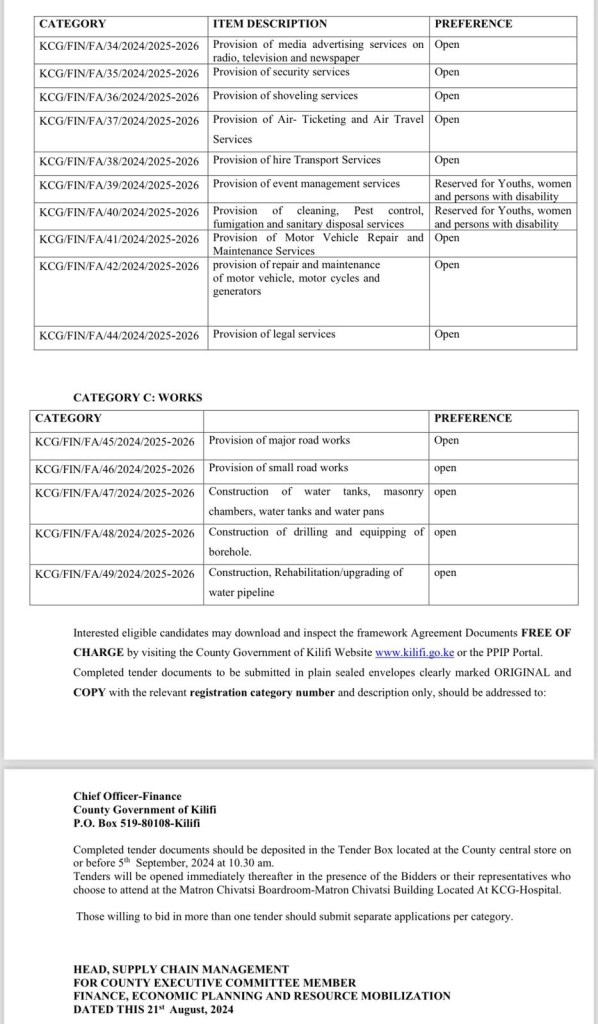
“I am writing to seek clarification regarding the recent procurement practices adopted by the County Government of Kilifi. Specifically; I would like to inquire whether the Public Procurement Regulatory Authority (PPRA) has given express authority to the County Government of Kilifi to place all categories of procurement of goods and services into a 2-year term framework contract,” the letter reads.
The businessman claims the model has negative consequences on startup businesses and paves way for procurement monopoly.
“Furthermore, I am concerned about the implications of this decision on new businesses that will be established after the 5th of September 2024. Such a framework contract could potentially limit the opportunities for these new businesses to participate in public procurement processes thereby affecting their growth and sustainability,” it adds.
He has asked the regulator to clarify whether it granted explicit authorization to the county for the implementation of a 2-year term framework contract for all categories of procurement and if such authorization has been granted what considerations were taken into account regarding the impact of new businesses that will be established after the specified date.
He also wants information on any measures that the PPRA recommends to ensure that new businesses are not disadvantaged by this framework contract.
The County adopted the contracting model this year and critics claim it has created an avenue to help a clique of suppliers friendly to the administration of the day.
Possible court action
It was just last week when a group of businessmen threatened to seek legal intervention over the frame agreement contracting. They claim it is skewed and tilted in favour of a few unscrupulous businessmen.
Frame contracting has been deployed in various national government departments with Kilifi County adopting the model this year 2024.
Since then, reports have been rife that few suppliers have dominated the supply chain exposing the county to the risk of reduced innovation lack of compliance.
To date, various reports have linked senior county officials for dominating the supply chain through their proxy companies. A dominant supply chain made of individuals who have run the show in Malindi Mombasa and the municipalities has been having a field day reaping big at the expense of hundreds of other potential suppliers.
This is now headed for a legal battle heavily reliant on similar other cases where courts have stopped state agencies from using the model to procurement after suppliers who had otherwise won tenders had their contracts ended prematurely.
“What is happening is that a few individuals are now meeting in hotels to decide who supplies what when and where all in the name of frame contracting,” a young supplier based in Malindi lamented.
He added: We will seek legal action now to remedy the situation because that seems to be the only option left for now,”
The disgruntled business fraternity also claims the framework contracting that has been going on across all sectors has instead led to massive collusion kickbacks favoritism and overpricing of contracts.
In general practice frame contracting is usually designed to guarantee cost savings, improve efficiency, enhance accountability, promote standardization and guarantee capacity building.
However, in Kilifi, the situation speaks otherwise with cases of illegal tendering, delayed implementation of projects and nepotism taking center stage.
Previously, we have had a situation where a company sued Kenya Ports Authority (KPA) to seek judicial review orders in respect of tender numbers KPA136/2021-22 which was a framework agreement for drainage and water reticulation KPA 137/2021-22 framework agreement for Road Works KPA 138/2021-22 framework agreement for concrete works and KPA.
The company asked the Mombasa High Court to compel KPA to terminate procurement for the supply of similar services in respect of the said tenders. The application was premised on the grounds that the KPA had advertised the tenders yet the company had already been contracted to offer the services for two years by the same state agency.
This is why framework agreements can be dangerous.
Limited Flexibility
While framework agreements offer a significant number of advantages, they also limit a business’s flexibility with suppliers and vendors. If a business wants to change suppliers for example they will have to renegotiate the terms of the agreement. This can be time-consuming and costly and it can also force the business to stay with a supplier that they would otherwise not choose.
Risk of Overreliance
Framework agreements can lead to overreliance on suppliers and vendors. This is especially true if the agreement is long-term and covers a significant amount of work. If the supplier or vendor experiences problems this can cause significant disruptions to the business’s operations.
Legal Challenges
Framework agreements can be complex and it is essential to have a good understanding of the legal implications before signing an agreement. This can lead to issues and legal challenges in the future which can be difficult time-consuming and costly to resolve.
PPRA strips of Tana River procurement rights
The letter to PPRA comes a day after the regulator stripped off functions of procuring services and products from Tana River County which now becomes the first devolved unit to suffer the fate even as the watchdog intensifies a purge against shady tender deals.
PPRA Director General Patrick Wanjiku said the regulator has begun the process of transferring the county’s Procurement role to another entity to safeguard public funds after officials at the devolved unit failed to heed to a warning against opaque tendering processes.
PPRA met with Governor Mung’aro
In July, PPRA officials initiated a collaborative effort with county governments and other procurement entities to identify and address challenges in the procurement process, aiming to improve compliance and service delivery.
This initiative came after PPRA’s observation of low compliance rates across various procurement entities nationwide.
Speaking to the media after a meeting with Kilifi County Governor Gideon Mung’aro, PPRA Chairperson Jimmy Kahindi noted that many national and county government staff members were unfamiliar with the PPRA digital system which is crucial for uploading details about contract advertisements and awards.
“It has come to our knowledge in the counties that we have visited so far that most of the procurement staff have not been taken through training on how to work with this new system. That is a challenge that we are seeing and are ready to address,” Kahindi noted.
The Chairman who was in Kilifi to review the county’s public procurement reports stressed that PPRA’s role is supportive rather than adversarial offering assistance to both national and county governments in procurement matters.
According to Kahindi, effective procurement and the successful management of its challenges could significantly reduce corruption cases in the country stating that since procurement forms the foundation of most activities in both national and county governments ensuring its integrity is crucial for overall governance.
“Procurement is the baseline of everything that happens in the national and county governments because most of the services and goods are procured and this is where it all starts. So if we can get procurement done correctly, we can avert corruption cases,” Kahindi remarked.
He also urged the public to report cases of contractors failing to deliver on awarded contracts directly to PPRA rather than to other bodies such as the Ethics and Anti-Corruption Commission (EACC) and the Directorate of Criminal Investigations (DCI) adding that these bodies often referred such cases back to PPRA.
How Loise Makena Stole Governor Gideon Mung’aro’s Heart and Ksh. 200 Million
The story of Kilifi Governor Gideon Mung’aro and Loise Makena was a riveting tale of lust, deceit and the high price of ambition.
A former employee who was once part of the dirty deals in Kilifi County reached out to blogger Cyprian Nyakundi under the request of anonymity and revealed intricate details that deserve public awareness.
It all began with his entanglement with the 30-year-old surveyor by profession.
She was a sultry seductress whose charms captured the unsuspecting politician.
Their clandestine affair, spanning three years, was filled with trust and intimacy.
However, little did Mung’aro know, Makena had hidden agendas.
She strategically positioned herself to exploit Mung’aro’s vulnerabilities and leverage their connection to orchestrate a scheme that would shake the foundations of his authority.
Makena first met with Mung’aro when he was serving as the Cabinet Administrative Secretary in the Ministry of Lands.
She partnered with Mung’aro and registered proxy companies that saw them swindle millions of shillings from county coffers for consultancy services.
We understand that when Mung’aro declared interest in running for the Kilifi seat, their relationship rocketed miles high with Makena getting elevated into serving more like Personal Assistant, manager, and advisor on critical issues especially mobilization of funds.
She sat at the helm of the campaign.
Mung’aro entrusted her with a crucial role to bring on board companies, suppliers, and partners to help him embezzle public funds either through fake supplies or by getting commissions on fraudulent contracts.
Mung’aro entrusted her with all the illicit money from corrupt deals.
She controlled at least 2M USD, approximately Ksh. 200 million.
The Governor, blinded by the steamy and irresistible love escapades courtesy of Makena, is believed to have bought and registered several properties under Makena’s personal details.
Some of the multi-million properties are located at the Coast.
Most of the multi-Milllion deals revolve around garbage collection and consultancy services.
Then one evening, as the sun set over the coastal horizon, Governor Gideon Mung’aro stood in disbelief, his once-luxurious estate now empty and void of the laughter and whispered promises that had once filled it.
The air was thick with betrayal as the scent of Makena’s perfume mocked him with memories of passion now tainted by deceit.
It had started like any other day, with Mung’aro eagerly awaiting Makena’s return from her purported business trip.
But as the hours stretched into eternity, anxiety gnawed at his heart like a relentless predator.
With each unanswered call and vacant response, his fears grew until they consumed him whole.
The governor’s worst fears were confirmed when he stumbled upon evidence of Makena’s betrayal hidden in the depths of their shared sanctuary.
Papers were strewn across the desk, accounts drained of their wealth, and a note – cold and callous – declaring her departure, leaving behind nothing but shattered dreams and a trail of broken promises.
In that instant, he knew that he had been nothing more than a means to an end – a casualty of Makena’s insatiable greed and unquenchable thirst for power.
It was a tragedy that left many wondering what other secrets lay hidden beneath the surface of their seemingly perfect life.
Kilifi county needs prayers not forgetting the Shakhahola tragedy where over 200 dead bodies were dug out following a cult-led fasting by the church.
 KenyanHour