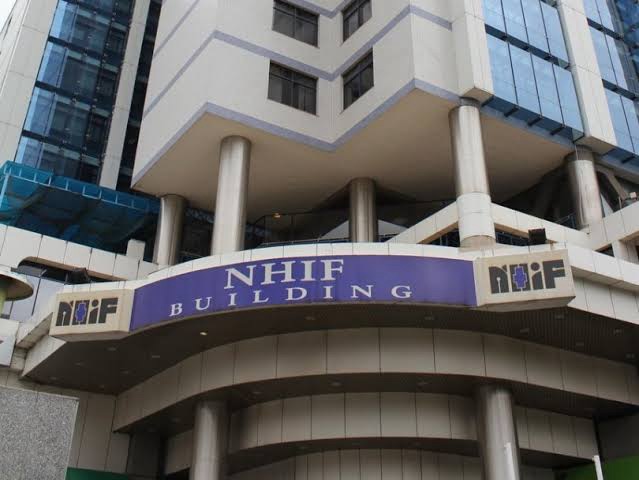
7 months ago parliamentary committee uncovered a massive scandal at the National Health Insurance Fund (NHIF) now transformed to SHIF, revealing how corrupt officials siphoned off a staggering Ksh 21 billion in just one year by fabricating non-existent debts.
According to the Public Petitions Committee of the National Assembly, this enormous sum was diverted from several key NHIF accounts: Ksh 2.9 billion from civil servants’ schemes, Ksh 4.1 billion from the Eduafya Scheme, Ksh 525.3 million from county schemes, Ksh 780.7 million from parastatals, Ksh 191 million from retirees’ schemes, and Ksh 2.3 billion from Linda Mama.
Committee member Ernest Kagesi criticized the scheme, stating, “The officials created liability accounts knowing they had no intention or means to pay, using funds meant for other state agencies without notifying the members.” Kagesi, who led the meeting, expressed outrage over the theft, declaring, “Sh21 billion was stolen through fictitious liabilities. We are determined to uncover the full extent of this scandal.”
The scandal was brought to light by one Bernard Muchere, a Fraud Risk Management consultant. He revealed that NHIF was defrauded through fictitious Incurred But Not Reported (IBNR) claims for the financial year ending June 30, 2022. Muchere argued that without a legitimate sinking fund account to back these claims, the supposed reserves were merely book entries.
Muchere detailed how these false IBNR claims, totaling approximately Sh21 billion, were offset against member contributions, leading to severe financial shortfalls. This mismanagement drastically reduced patient benefits and left many Kenyans struggling with inadequate healthcare coverage.
IBNR reserves are typically used by insurers to account for potential future claims that have occurred but have not yet been reported. Muchere explained that in the US, for instance, these reserves are set aside following natural disasters to cover anticipated claims. However, NHIF’S IBNR claims were fictitious and not based on actual, anticipated liabilities.
Muchere further pointed out that NHIF members faced card invalidations because the money had been misappropriated, leaving the fund’s coffers empty. He chose to bring the issue to Parliament rather than report it to investigative agencies like the DC or the Ethics and Anti-Corruption Commission (EACC) due to past experiences with similar scandals.
Upon examining NHIF’s financial statements, Muchere found that the IBNR claims, amounting to over Sh21 billion, were fraudulently created and charged to member contributions, causing a severe financial crisis.
This led to an inability to pay hospital bills for legitimate contributors and a significant impact on patient care.
The NHIF Board of Management and CEO were to produce a financial statements, identify which healthcare providers received IBNR funds, and was to determine whether these claims were legitimate. He urged Parliament to recover the misappropriated funds if the claims were found to be false.
He also highlighted discrepancies in the audited financial statements, including the sudden appearance of IBNR reserves in the 2021/2022 financial year and the dubious origins of the reported figures. Muchere concluded that the creation of these reserves was part of a deliberate scheme to embezzle Sh21 billion from NHIF funds.
The case died a silent death, most likely – money exchanged hands.
These nature of massive looting have always led to deaths of workmates who oppose such deals, get permanently silenced through assassinations like Mary Gathenya, 46 who was shot in collarbone. The bullet had been fired from an elevated angle and went into the body through the collarbone before stopping in the lungs. The NHIF staff collapsed and died along Kaunda Street. She was an employee at the Registry department.
This Heist Magnitude is almost similar to the Clinix Scandal that did rob NHIF millions of Shillings for ghost facilities.
Clinix Healthcare Limited now Bliss medical, LifeCare medical owned by Jayesh Saini the Sputnik vaccine smuggler and MAKL owner too was allocated Sh202 million in the first quarter under Pharma Investment Holdings, an off-shore company which owned 99 per cent shares and a local company – Beneficial Limited – with one per cent shares.
Dinlas Pharma, according to the Registrar of Companies, was not registered in Kenya. Documents presented for registration of the limited liability company indicated it was registered in the British Virgin Islands under number C. 1028943.
Meridian Medical Group and Clinix Healthcare at the centre of the controversy were allocated a total of Sh120 million by the NHIF under the capitation scheme for ghost facilities. Meridian was paid Sh30 million for six ghost facilities while Clinix was paid Sh91.3 million for 21 outlets.
 KenyanHour